SUNLU S2 Single-Spool Filament Dryer vs SUNLU S4 Four-Spool Filament Dryer
Head-to-head spec comparison to help you pick the right environment upgrade for your needs.
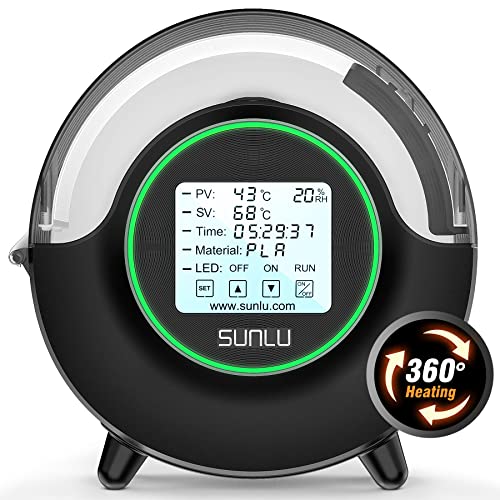
SUNLU
$44.99
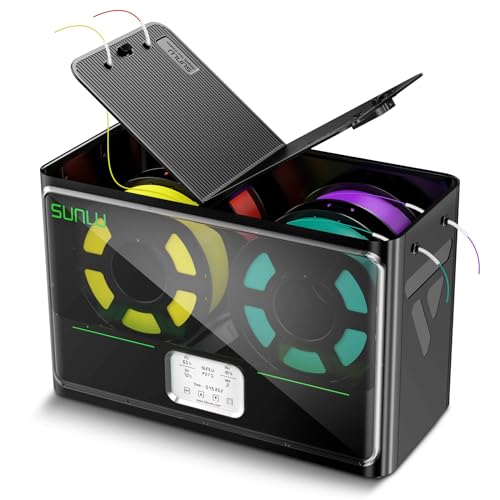
SUNLU
$169
Verdict
It's a Tie
The SUNLU S2 Single-Spool Filament Dryer and SUNLU S4 Four-Spool Filament Dryer are evenly matched. Your choice depends on which features matter most to you.
Spec-by-Spec Comparison
| Spec | SUNLU S2 Single-Spool Filament Dryer | SUNLU S4 Four-Spool Filament Dryer |
|---|---|---|
| Category | Filament dryer | Filament dryer |
| Role | Single-spool diagnostic dryer | Multi-spool drying station |
| Max Temp | 70 C | 70 C |
| Capacity | 1 spool | 4 spools |
| Active Heat | Yes | Yes |
| Active Airflow | Yes | Yes |
| Humidity Readout | Yes | Yes |
| Print Through | Yes | Yes |
| Ventilation | No | No |
| Resin Workflow | No | No |
| Abrasive Ready | No | No |
| Best Materials | PETG, TPU, PLA+ | PETG, TPU, nylon, PLA+ |
| Footprint | Compact bench box | Large bench station |
| Price | $44.99 | $169 |
| Rating | 8.6/10 | 9.1/10 |
| Buy on Amazon | Buy on Amazon |
Pros & Cons
SUNLU S2 Single-Spool Filament Dryer
Pros
- Single-spool format is the right size for diagnosing whether wet filament is actually the cause of stringing, popping, and dull surfaces.
- Active heat and a compact footprint make it easier to leave on the bench than a food-dehydrator workaround.
- Print-through path supports long PETG or TPU prints without moving the spool back into room air.
- Good middle ground for users who need real drying but do not yet need a four-spool station.
Cons
- One spool at a time becomes frustrating once you rotate several colors or materials every week.
- You still need dry storage boxes for partial rolls after the drying cycle.
- No single dryer can fix under-extrusion, retraction, or temperature mistakes that only look like moisture.
SUNLU S4 Four-Spool Filament Dryer
Pros
- Four-spool capacity makes it the cleanest single purchase for AMS-style benches, color swaps, and households with several open rolls.
- Active heat plus circulation solves the two-part drying problem: warming the spool and moving humid air away from the filament surface.
- Print-through workflow reduces the chance that a dried nylon, TPU, or PETG spool immediately reabsorbs moisture while a long job runs.
- The higher price is easier to justify when you would otherwise buy two single-spool dryers plus separate dry boxes.
Cons
- Overkill for a one-printer PLA bench where a sealed storage box and occasional single-spool dryer would do the job.
- Large footprint demands a real bench position, not a corner shelf.
- Multi-spool dryers do not replace labeled dry storage; partial rolls still need sealed long-term storage after the print.
Our Verdicts
SUNLU S2 Single-Spool Filament Dryer
The SUNLU S2 is the most practical first filament dryer for a small Print Climate bench. It gives you a repeatable moisture-control step without forcing a huge workstation change, and it pairs naturally with sealed dry boxes once you have more than two active rolls.
SUNLU S4 Four-Spool Filament Dryer
The SUNLU S4 is the best launch pick for a printer owner who has moved past one open PLA roll and now needs an actual humidity-control station. It is not the cheapest way to dry a spool, but it is the most coherent way to keep several filaments usable, print from the box, and stop treating wet PETG or nylon as a printer-tuning mystery.